Auckland Cross Leases Explained: What They Actually Mean for Homeowners

Updated: Apr 6

If you've ever heard the term cross lease and felt your eyes glaze over slightly, you're not alone.
Cross leases are one of those very New Zealand property inventions — dreamed up decades ago by some very clever lawyers, embraced by councils, and now responsible for countless "wait, what does that mean?" conversations at open homes. I have them regularly.
They sound complicated. They can be complicated. But they're also far more common — and far less scary — than many people think.
On the North Shore alone, a significant proportion of homes in established suburbs like Murrays Bay, Rothesay Bay, Sunnynook, Glenfield, and Forrest Hill sit on cross lease titles. If you're buying or selling in these areas, you'll almost certainly encounter one.
So let me demystify them.
What is a cross lease, in plain English?
At its simplest, a cross lease means you own your home (the building), you share ownership of the land with one or more neighbours, and you all lease the land to each other — hence the term cross lease.
It's a bit of a legal gymnastics routine. Thank you again, clever lawyers.
Each owner has a long-term lease (often 999 years — because lawyers like certainty) giving exclusive use of a defined area of land. This is shown on a document called a flats plan, which is attached to the title.
Why do we have so many cross leases in Auckland?
Cross leases really had their moment from the 1960s through to the 1980s. They allowed developers to build more homes on one site, avoid full subdivision costs, and move faster and cheaper through council processes.
As a result, they're everywhere in Auckland — and particularly common on the North Shore. If you've ever driven down a street of tidy brick-and-tile units from the 1970s in Murrays Bay or Rothesay Bay, chances are you've just passed several cross leases.

Are cross leases bad?
This is usually where people lower their voice and ask the question.
Short answer — no, not automatically.
A well-set-up cross lease can be perfectly fine, especially when the flats plan accurately reflects what's on the ground, owners have a reasonable understanding of shared areas, and no one's done anything adventurous without the right permissions.
Many Aucklanders live happily in cross lease homes for decades and never have an issue.
The flats plan: important, but not panic-worthy
This is where things can get a little technical — and where myths often take over.
A flats plan is the legal diagram showing the footprint of each dwelling and the shared versus exclusive-use areas. Over time, properties change. Decks get added. Garages appear. Someone finally builds that extra room they've been dreaming about.
Here's the key point — not every change automatically means the flats plan must be updated.
There are exceptions, and whether an update is required depends on things like whether the original dwelling footprint has changed, whether the work is enclosed or structural, what council consent rules applied at the time, and how the flats plan was originally drawn.
Two homes with very similar alterations can be treated quite differently by lawyers, banks, and insurers — which is why blanket statements don't help anyone. I've seen this play out firsthand across three very different situations.
Three cross lease scenarios I've dealt with
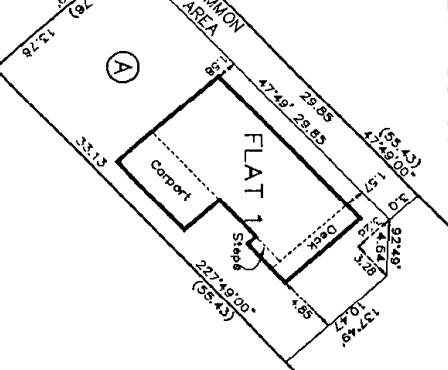
A deck with consent — but not on the flats plan. I recently sold a property at 60 Chivalry Road in Glenfield where the deck wasn't shown on the flats plan. That sounds like a problem — until you dig into the detail. The deck had a fall of over one metre, so it required building consent and a Code Compliance Certificate, both of which were present and in order.
But because a deck is an unenclosed structure, it doesn't actually need to appear on the flats plan.
What was required was the cross lease neighbour's consent — and in this case, the original owner of the neighbouring property was the same person who built the deck. The buyers were given all of this information and asked to confirm it with their own lawyer, who agreed. No issue.
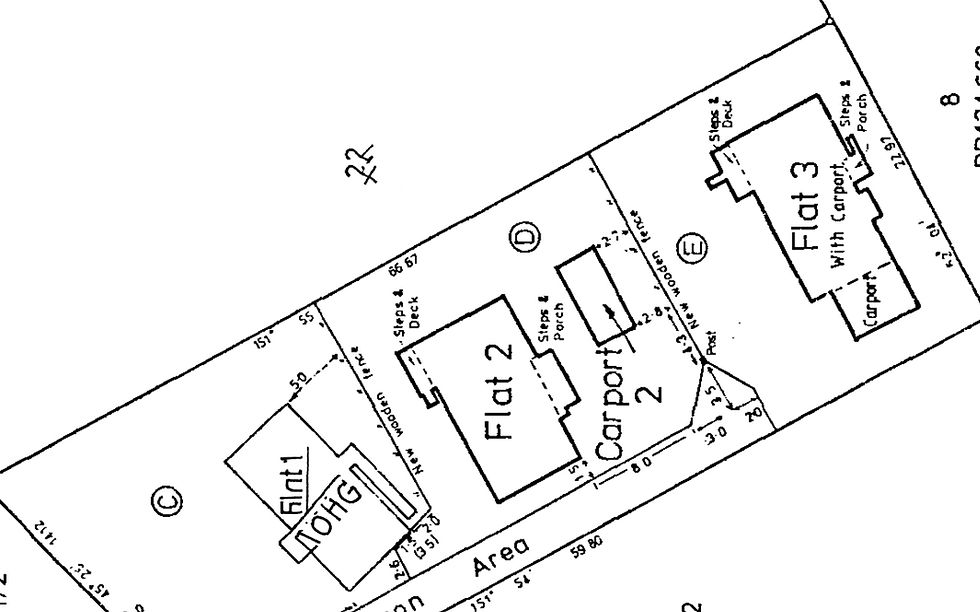
A deck without consent — resolved with neighbour agreement. On another cross lease property on Sunnynook Road, there was a deck that didn't require building consent but was physically present on the property and not on the flats plan.
In this case, I coordinated written consent from all three property owners on the cross lease title and provided it to the buyers' legal advisor for review. It didn't create any issues. The key was getting ahead of it — identifying the question before it became a problem, and having the documentation ready.
A carport that looked like a problem but wasn't. On the buyer side, I helped a client purchase a property in Meadowbank where a carport had been built but wasn't on the flats plan. The buyer was understandably concerned. But again, a carport is an unenclosed structure — and I was able to guide them through why the cross lease title wasn't actually faulty. Understanding the distinction between enclosed and unenclosed structures saved a deal that could have fallen over on a misconception.
The common thread in all three? The answer was never a simple yes or no. It required knowing what to look for, understanding the rules, and getting the right legal advice early. That's what I mean when I say every cross lease needs to be assessed on its own merits.
Cross lease myths vs facts
Myth | Fact |
Cross leases are impossible to sell | Cross lease homes sell every single week across Auckland. |
Any alteration makes the title defective | Some changes matter. Some don't. Enclosed vs unenclosed is a key distinction. |
Banks hate cross leases | Most major lenders are comfortable with them when titles are in good order. |
Freehold is always better | Freehold is different — but a good cross lease can still be a great buy. |
Cross lease vs freehold: which one wins?
Freehold is often seen as the gold standard — and yes, it comes with fewer moving parts.
But cross lease properties often offer better value for money, larger homes, and access to premium suburbs at a lower price point. In the East Coast Bays, some of the best-located properties — walking distance to Murrays Bay Beach, in zone for Rangitoto College — are cross lease titles. Ruling them out entirely means missing opportunities that can represent genuine value.
The real issue isn't freehold vs cross lease. It's understanding what you're buying.
My advice
I deal with cross leases regularly, and most problems arise not because of the title itself — but because people don't fully understand it until late in the process.
Review the title and flats plan early. Talk to a property lawyer sooner rather than later. And don't panic — ask questions. A cross lease isn't a deal-breaker. It's just a slightly more creative way of owning property.
Thinking of buying or selling a cross lease property?
Whether you're buying your first home or preparing to sell, understanding your title can save you stress, time, and money. If you're not quite sure what kind of title you have — or what it means for your next move — we're always happy to explain it in plain English, without the legal jargon.



Comments